
DESIGNED FOR SPACE
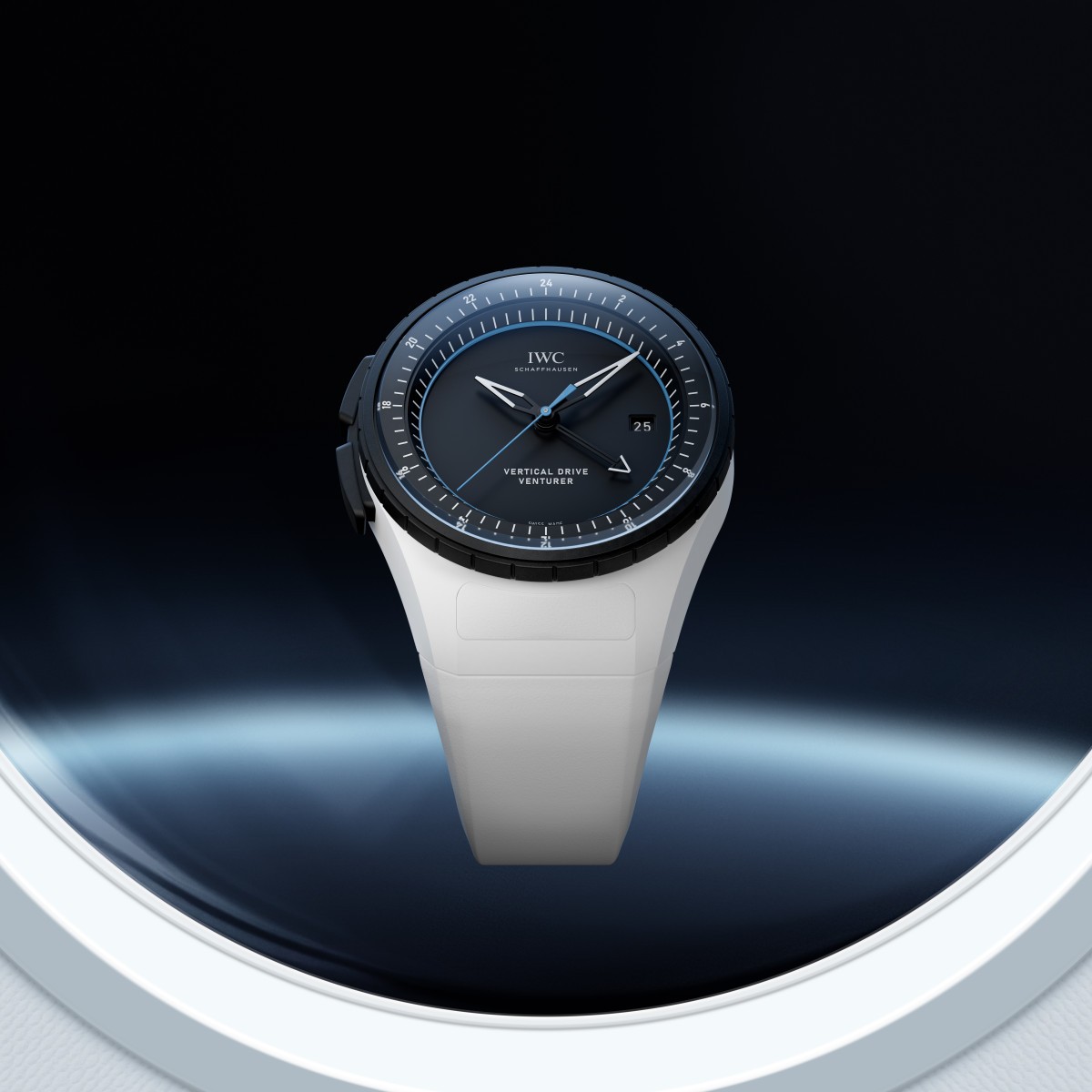
The most important detail of IWC’s Pilot’s Venturer Vertical Drive is something it leaves out. There is no conventional crown to pinch between finger and thumb. Instead, the bezel becomes a control surface, changing how the wearer interacts with the watch.
Unveiled on 14 April 2026, reference IW328601 was developed for the demands of human spaceflight. Its rotating bezel and side-mounted rocker switch handle winding and setting. IWC links the concept to the practical difficulty of operating a small crown while wearing gloves.
Begin with the hand
That is a useful starting point for any tool watch. Before asking how an object should look, ask how it will be touched. A control that is elegant in a studio can become awkward when the user’s grip, clothing or environment changes.
The Venturer makes that problem visible. Its broad circular perimeter reads as something to grasp, while the side switch gives the interaction a second step. From the published design, the control system appears to shape the case rather than sit on it as an afterthought.
A material contrast with a purpose
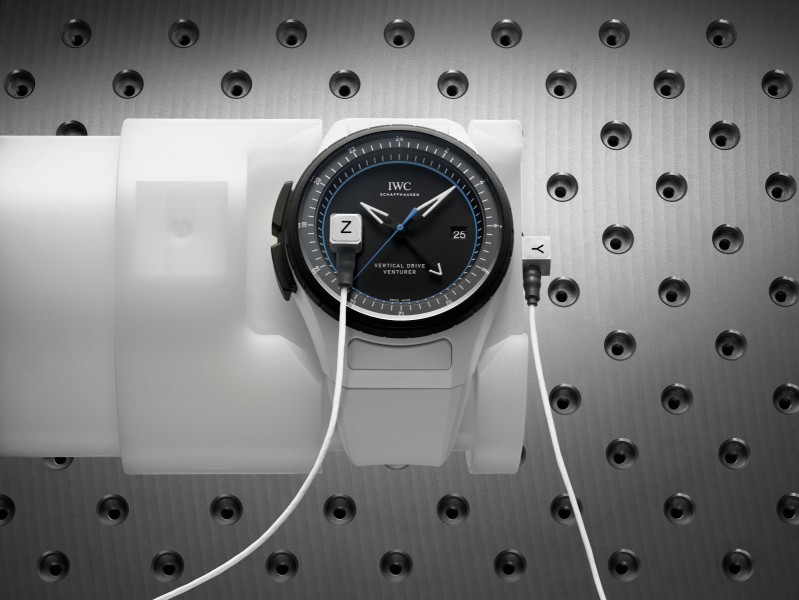
IWC combines white zirconium oxide ceramic with Ceratanium for the bezel and caseback. The automatic calibre 32722 has a stated 120-hour reserve and a dual-time display, including a 24-hour indication. A white rubber strap continues the case’s pale exterior.
In the official photography, that light shell gives the dark dial a particularly clear boundary. The colour contrast is stronger than the decorative detail. It makes the watch look like a single instrument, with the reading surface separated from the parts that surround and protect it.
Our interest is not in whether white automatically looks futuristic. It is in how a limited palette can make an unfamiliar object easier to understand. The viewer quickly locates the dial, the bezel and the switch. That clarity is a worthwhile design achievement in its own right.
What qualification means here
IWC says its partner Vast tested and qualified the watch for Haven-1 spaceflight conditions and crew use. The announcement describes vibration and pressure evaluations. That is a specific qualification by Vast; it should not be read as NASA certification or proof that this reference has already completed an orbital mission.
Keeping that distinction clear helps the engineering story. Preparation for an environment and experience within it are different forms of evidence. Both can matter, but they should not be merged into a single adventurous headline.
The terrestrial question
Most collectors will consider this watch on Earth. Their useful questions will concern legibility, fit and whether the bezel-operated system feels intuitive after the novelty wears off. A fitting and a demonstration will say more about those points than a campaign image can.
What we can appreciate now is the discipline of starting with a real interaction problem. The Venturer gives its unusual appearance an intelligible reason. That is what makes it worth examining beyond the space-travel association.
Source and photography: IWC Schaffhausen — official announcement and specifications. Images © IWC Schaffhausen. This article is editorial analysis of official photography and published specifications, not a hands-on review. Superwatchman has a commercial relationship with IWC.

