INDEPENDENT WATCHMAKING
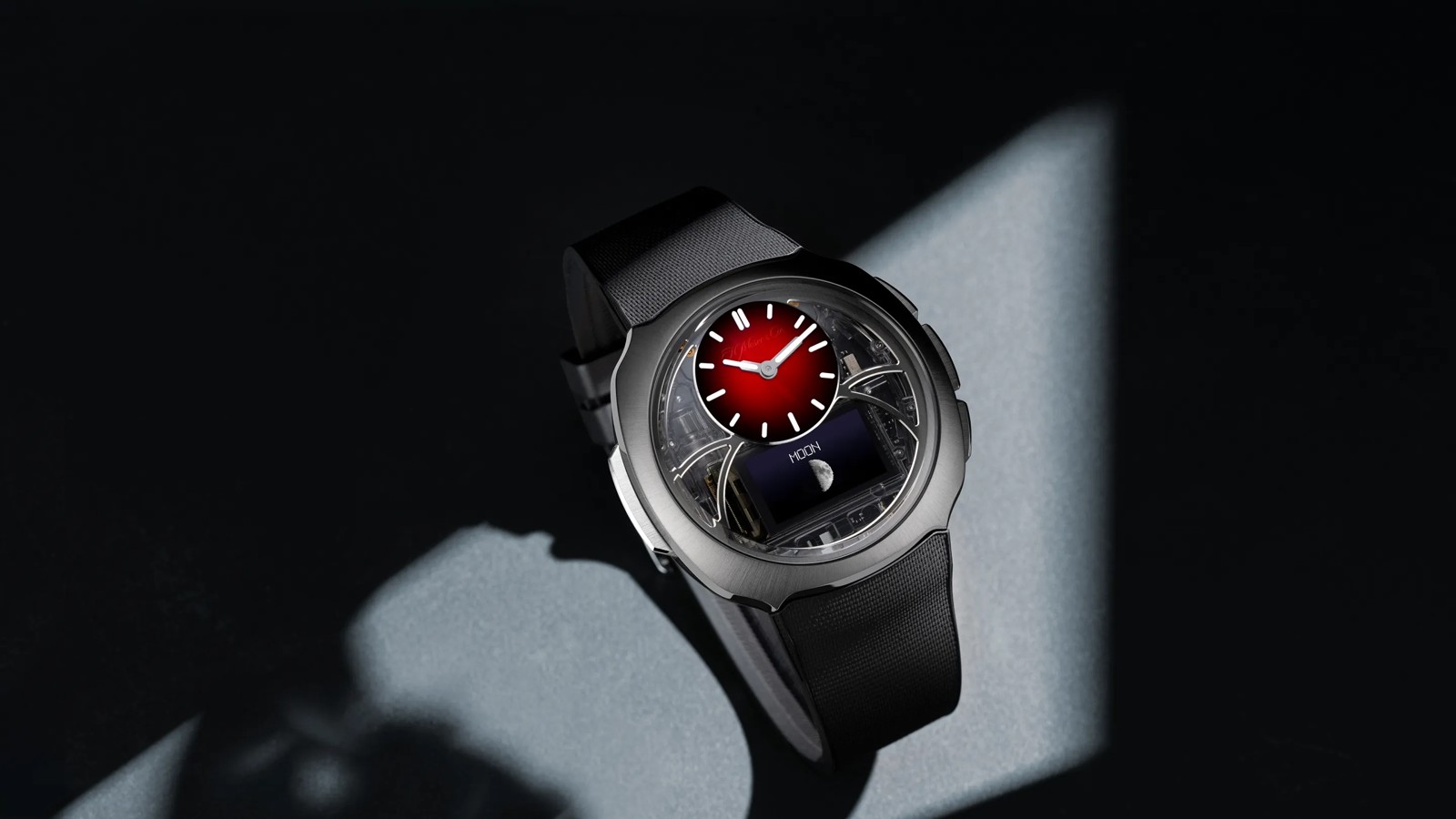
The red fumé dial catches the light first. Below it sits a screen. H. Moser & Cie.’s Off-Grid brings two familiar ways of reading time into the same case, then leaves the collector to reconsider what kind of watch this is meant to be.
Introduced in September 2026, the Off-Grid uses calibre D10, developed with Sequent. The black version shown here is reference 6DI0-1205. A 42.6 mm steel-and-black-composite case surrounds a skeletonised display, with an integrated rubber strap completing the outline.
A dial above a display
The most effective visual decision is the separation between the small domed analogue dial and the digital information below it. The red surface gives the watch a recognisable centre of attention. The screen can then behave as another layer rather than becoming the entire face of the object.
That relationship matters because a display is not only a technical component. It changes where the eye goes, how often information is consulted and what the owner expects from the watch. Here, the analogue element offers a stable visual anchor within an object capable of doing considerably more.
A deliberately selected set of functions
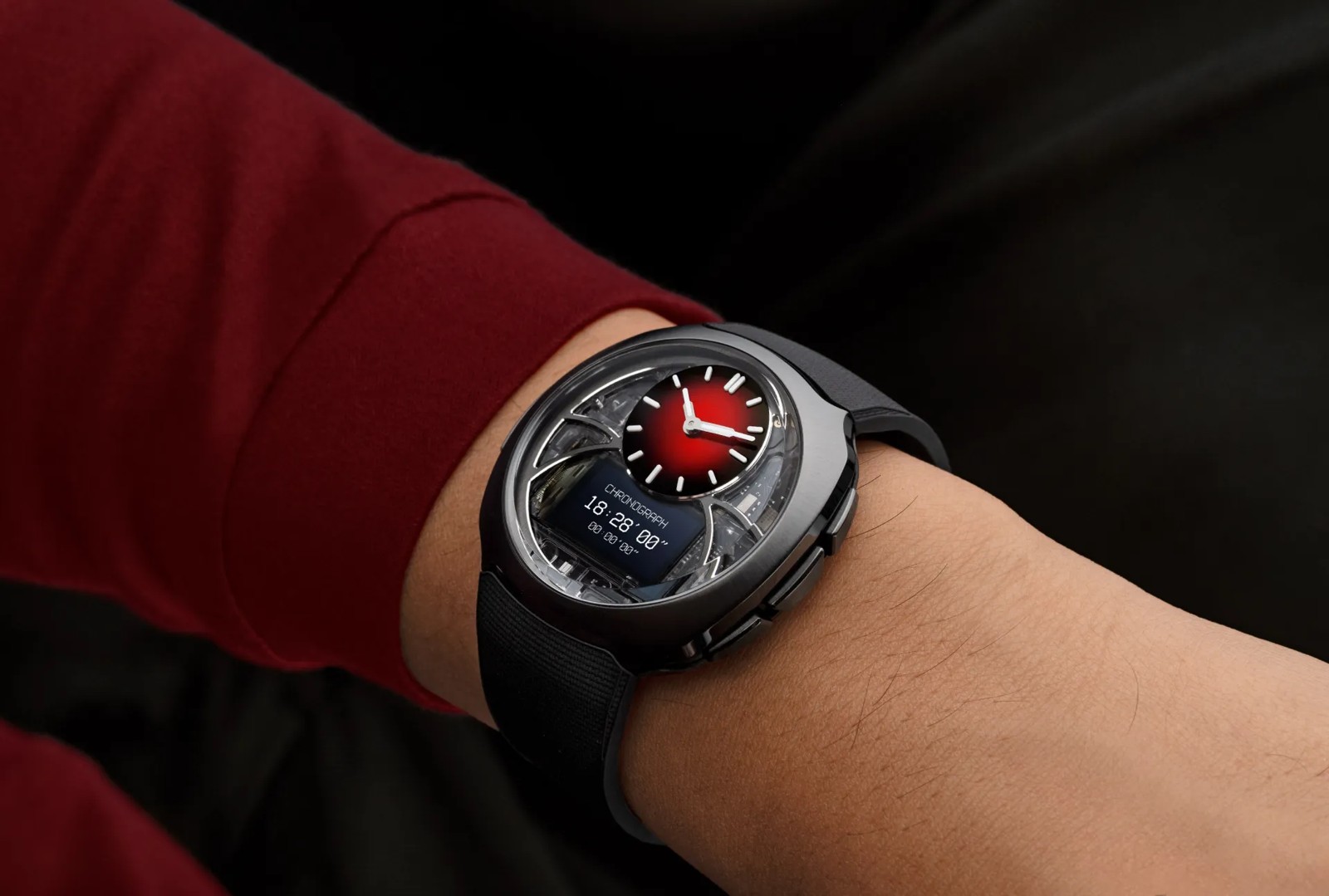
Moser lists world-time and GMT functions, a split-seconds chronograph, calendar, moonphase, sunrise and sunset information, alarm and timer. Its stated endurance is up to twelve months in time-display-only mode, or six months under the brand’s specified mixed-use scenario. These are usage-dependent claims, not a promise that every owner will obtain the same result.
The useful question is not simply how many functions fit inside. It is how many a person will actually use. A travel function that is understood and consulted regularly can have more practical value than a long menu that remains unexplored.
We would want to test the transitions: how quickly can the owner move from ordinary time to an occasional function, and how easily can the watch return to its simplest state? That is where a digital watch’s design becomes tangible. A specification sheet can describe the destination without describing the journey.
The freedom to do less
Moser positions the Off-Grid around useful information without an avalanche of notifications. It is a compelling editorial premise. A wristwatch occupies an unusually intimate place in daily life; every demand it makes on attention arrives close at hand.
Our reading of the design is that the mechanical-watch aesthetic and the screen need not be opponents. The real tension is between information chosen by the wearer and interruption imposed on the wearer. A well-resolved interface could make the first feel natural without inviting the second.
A different collecting question
The Off-Grid is worth examining as an object with its own purpose, rather than ranking it by how closely it imitates a conventional mechanical watch. Its red dial gives it a strong visual signature. Its longer-term appeal will depend on whether the functions remain useful and pleasant to access after the first week.
That is a demanding test, but a good one: a watch should reward the attention it asks for.
Source and photography: H. Moser & Cie. — official announcement and specifications. Images © H. Moser & Cie. This article is editorial analysis of official photography and published specifications, not a hands-on review.